Monday, May 24, 2010

Official Website
The official Nereo II website will be up and running in about 3-4 weeks. It's time the world knows the name and what's behind it. Stay tuned..
Sunday, May 23, 2010
Underground Warfare


photo1 courtesy of Tadao Horikawa and 2,3,4,5 of Annex Panlilo
What a jam what a jam. I don't think there will be another opportunity to break, emcee, and have my art on display all at in the same venue, well atleast not for a while. What a beautiful life. I'm taking advantage of it until it comes down. Speaking of which, the gallery has decided to extend my exhibit untill August 27 at which time the Governor General of Canada will come visit the graffiti gallery.
Coloring outside the box
Jazzy Jester of the Albino Rhinos crew came to Wininpeg to share his philosophy on dance and hip hop. He did a workshop that involved alot of coloring outside the box, which I found very liberating. He promotes invidual creativity, and the confidence to be who you truly are, while still having that balance between whats outside and whats in. Know both, but use whats inside the box, to know what you want to do outside. What else did we learn....FALLING! learning how to fall..with style. WATER moving like it. Movement vs. moves. No one can move like you, people can imitate moves, but they cannot be you. what else..as soon as you begin to define what hip hop is, you are boxing yourself in, don't fall victim to that. Go for self, and do what feels natural. Flying Bears, angry snakes, majestics ASSteroids, and shoulder brushing handshakes.
"it's better to fail in originality, than succeed in imitation" - herman melville
and in other irrelevant news. I climbed onto a church roof today. Oh what fun
"it's better to fail in originality, than succeed in imitation" - herman melville
and in other irrelevant news. I climbed onto a church roof today. Oh what fun
Wednesday, May 19, 2010
no more drinks please
You know that feeling you get after you've had some drinks but can't remember how many you've had and your stomach turns and turns and you can barely walk straight, and you come home 10 hours passed your bedtime, you puke everywhere, you get a phone call from your friend reminding you that you have to perform a dance for some business people downtown, you have to do alot of movement, you have to spin on your back, roll around on the cement, but on the way there you make a stop at some back alley to puke some more, and all the colors of the rainbow that you mixed into your drinks from the previous night come spewing out on the floor and you feel somehwat releived but not entirely because you know the feeling wont go away right away... yea yea that feeling... fuck that feeling. no more poison please.
Tuesday, May 11, 2010
Two of a Kind


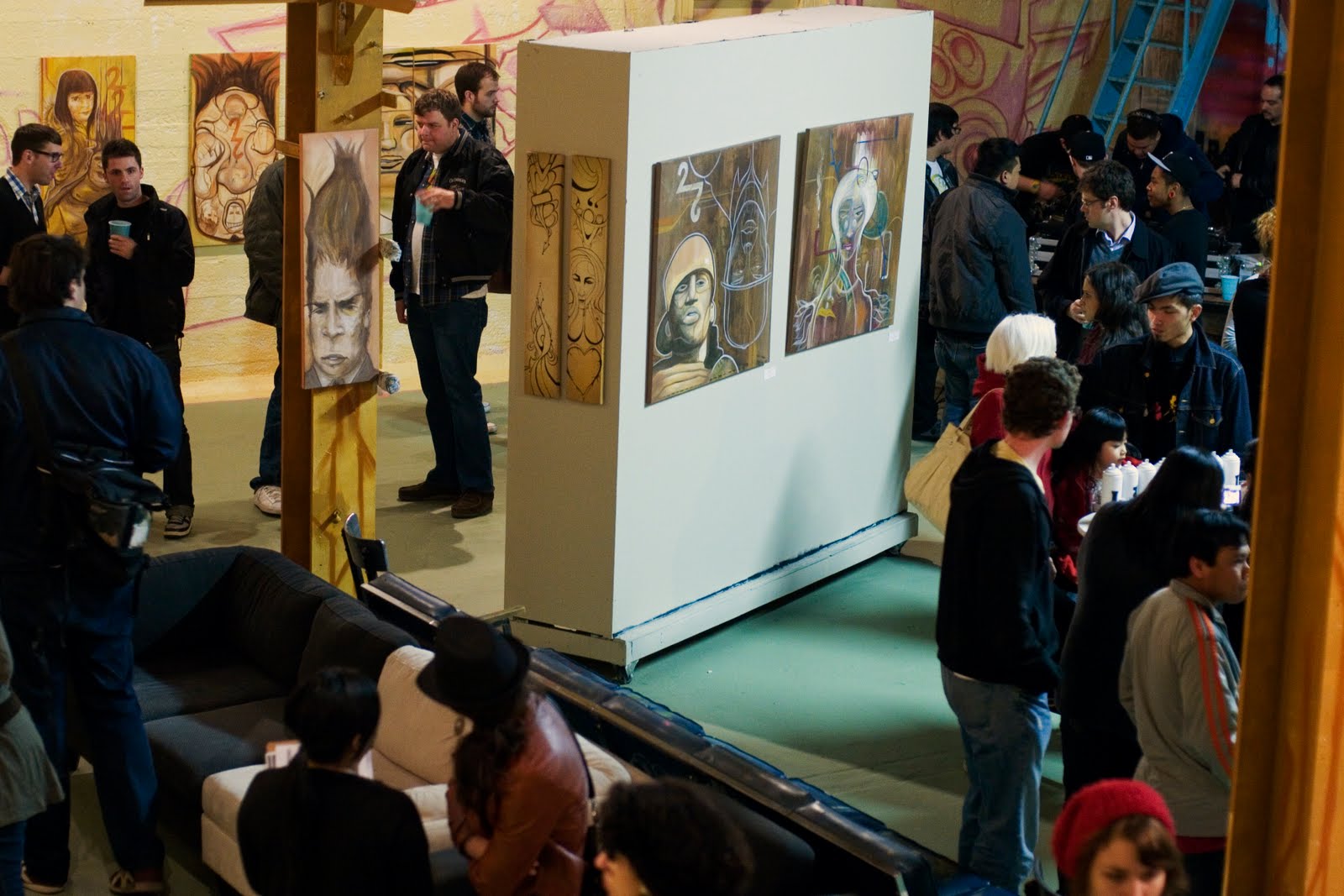
So the show was a success. Many people came through, alot of support was shown, many of the pieces were sold, some that I now regret selling. I'm happy that the artwork made people feel happy, and happier to know that it inspired alot of people to go home and make art. That is quite the reward. In the end I was happy, although I am still not satisfied with the outcome, and I think that it's a good thing. I enviosion something bigger, something wilder, something a little more fun, with a live performance, live painting and dance. And A book launch, and a cd launch. I will make this happen. Stay tuned.
Generosity can be good fortune

I received this as a gift in return of a small favour. The lesson learned from this is to always be good to good people. Good things will be returned. The key is not to expect anything in return.
"Lower the sails" in French became Beychevelle: when the Admiral de Nogaret was absent, it was his residence that received the honours of passing ships. Today the château is honoured by wine drinkers the world around. Its red wines of Saint-Julien, born of the marriage of Cabernet Sauvignon, Merlot, Cabernet Franc, and Petit Verdot, are the object of praise far and wide
Saturday, April 17, 2010
Monday night Raw

Last Monday the Powerful Pharoahe came to the Pyramid. He was what I expected...REAL. Human but so Godlike. So much soul in him, I was with him from start to finish on his set. I feel that he should have been highlighting the show instead of Slaughterhouse. on the contrar, it makes sense to have him go before hand, its primetime, plus, you get to go home early. (jokes) Slaughterhouse is nice, but it just aint for me. They were complaining about the mics and giving that Harry Potter soundman guy a hard time. Not once through Pharoahs set did it seem like a problem. When he did Simon Says of course the play errupts, its like the one track that everybody knows. But everything else, from the Soundbombing tracks to shit off of interntal affairs to bits from O.K days to the newer Desire shit..sweet lordie lord, I was on it. I caught capital Ph ar oa he pharaohe standing in the back by himself after his set. We shook hands and bowed heads. I extended my respects and that was that. Truly and Honour. Pharoahe is superhuman to me and that was special night. The rest of the hip hop that night was ...no comments
Saturday, April 10, 2010
Bushbabies

Leaked!
Come to my artshow at the Graffiti Gallery on May 6 and meet the bushbaby as well as other creations. in person!

Thursday, April 8, 2010
Battleship
nereo looks like hes been munching too much on his stereo. I would use that in a rap battle against me and WIN
Tuesday, April 6, 2010
Now they understand.
According to the 08/09 Red River College Student Evaluation Report, Graphic Design had the lowest overall score amongst all the Creative Arts programs. Graphic Design also scored the lowest for the "Instruction" category out of all the courses offered at the Princess St campus.
http://www.rrc.mb.ca/files/file/researchplan/sep/20082009SEPSrpt(1).pdf
Ha ha. I don't feel bad for dropping out at all.
http://www.rrc.mb.ca/files/file/researchplan/sep/20082009SEPSrpt(1).pdf
Ha ha. I don't feel bad for dropping out at all.
Monday, April 5, 2010

Friday, April 2, 2010

Saturday, March 27, 2010



Tuesday, March 23, 2010
Good Read for those who don't know the history
Mark Miazga
12/15/1998
The Spoken Word Movement of the 1990's
Poetry has always been an oral art form, going back in history to the time of Homer reading "The Odyssey." Poets, storytellers, and other troubadours would travel from town to town, reading their work and getting their poetry heard. This oral tradition sprang from necessity, as it was not possible to print hundreds of copies of poems, and reading them aloud was the only method people could experience the works. With the advent of such technology as the printing press, however, the art form of oral poetry gave way to the more practical process for getting poetry heard: publishing the poems. Oral poetry was not necessarily replaced by written poetry, but the focus did shift away from the immediacy of reading the work aloud to the more profitable and longer lasting option of getting the poems published. There have been a number of efforts to bring oral poetry back into the popular consciousness since this time. African Americans combined strong oral and musical traditions with call-and-response methods of communication to provide a genesis for contemporary African-American poetry. Other ethnic groups, like Native Americans, have also used oral and storytelling traditions to form formidable poetry roots. More conscious efforts occurred in the middle of the century, when the Beat Poets endeavored to bring poetry back to its oral roots and traditions.
It was a renewed fascination with the Beats in the 1990's that was an important catalyst for an oral poetry movement that swept through the United States youth culture scene. The Beats were a non-conformist community of writers and poets that became famous in the post-war years of the 1950's and 1960's that consisted of Allen Ginsburg, Jack Kerouac, William Burroughs, and others. Railing against the academic world and society's norms, their poems were not only meant for publication, but also intended for performance. This has a number of similarities with the 1990's oral poetry movement, something that is not lost on Ginsburg: "The … movement comes out of the Beats, but with rhyme." Indeed, the 1990's movement helped the Beats gain in credibility, with Ginsburg having a popular spoken word MTV video, Burroughs poeticizing in a duet with Nirvana's Kurt Cobain, and Kereouac having a tribute album that featured rock stars and actors reading his poems aloud (Appendix III).
The term given to this visceral, in-your-face style of contemporary poetry of the nineties was spoken word. Up until then, the term only described non-music sections in music stores that contained non-music comedy, plays, or famous speeches. In fact, there have been a number of issues with the breadth of the term spoken word, which The New York Times has called "pointlessly stiff," and the relationship of the term with poetry. For example, all poetry read aloud is spoken word, but not all spoken word is poetry. Sometimes, it is difficult to discern where spoken word ends and poetry begins.
This issue of defining and classifying spoken word, and how much of spoken word can actually be termed as poetry, is a problem even for the artists themselves. Maggie Estep, perhaps the most famous spoken word poet to emerge from the MTV spoken word movement this decade, said in a personal e-mail interview that her work is "all prose." Still, Estep has always been referred to in the past as a poet, appearing on Poetry Unplugged and the award-winning PBS series The United States of Poetry. She has also often defined much of her own work as poetry in the past, even being quoted once as saying, "I sort of wrote my first poem (emphasis mine) so I could say the word cheese a lot.". John S. Hall, another important name in the spoken word movement who has enjoyed radio airplay with his spoken word band King Missile, said that spoken word is, "a blanket term that cover(s) monologues, poems, stories, rap, etc. I like the term precisely because it is so ambiguous and broad."
Hall brings up an interesting issues, that of rap music. Is rap music considered spoken word poetry? Some spoken word poets would disagree that rap music is spoken word. Bob Holman, an integral and father-like figure of the spoken word poetry movement, has for years ran a series called "rAP is pOETRY" and said, "A spoken rap, or hip-hop, is a form of poetry, in my opinion, and since it is spoken, it is spoken word poetry." However, both Estep and Hall see a difference. Hall said, "Well, rap rhymes… I think rap is more musical, really. Rap is more like song. Spoken word is more like poetry. Spoken word generally is poetry. I used to use the term, spoken word, because I didn't think I was good enough to call myself a poet. But I don't just write poems; a lot of my stuff is in narrative form, so some of it's more like little stories than poems… perhaps rap isn't quite as diverse…". Estep also brings up the point of rap rhyming and spoken word not necessarily rhyming and offers this analysis: "…white people rapping does not usually work whereas white people spoken wording does work… Rap is (generally) not PC and spoken word is EXTREMELY PC." While the figures within spoken word may disagree, the general public seems to have made up its mind in saying that spoken word and rap are not the same, as the different sections in music stores attest. Still, there is no denying the strong connection between rap music and poetry, and many spoken word artists who read their poetry over a hip-hop beat sound a lot like rap singers. This problem of classification and how to draw the line between spoken word and rap music has affected many spoken word albums as record companies decide the best way to market the recordings.
The spoken word poetry movement of the 1990's was similar to the Beats in the 1960's, right down to the goatees, improvisational style, and coffeehouse vibe of the poets (leading to the nickname of "Wanna-Beats" for spoken word artists). Spoken word shares with the Beats a mutual disdain with the academic community, an emphasis on performance, and many poems in confessional and stream-of-consciousness styles. Still, there are a number of important differences. The first difference, as Hall notes, is the lack of emphasis at all on publishing. "…Some of these people haven't even put their stuff in book form. I had recorded six records before I had a book out, and most of my recorded work has never been published. Many poets today are more concerned with having their work heard, then (sic) having it read off the page."
Another important difference spoken word poetry of the 1990's has with the Beats, in addition to its lack of publication, is its diversity. "The Beats shared a philosophy, a political agenda, even a style…," said Holman. "The Beats were very particular about who was in and out. Spoken word has a rough-edged, populist attitude, is intent on spreading the word of all poetry, and carries a democratizing energy.". Estep agrees with Holman: "It's a product of the current times, thus there are women and other nonwhite men involved." Despite their liberal beliefs, the Beats were strictly a white male community, a marked distinction from the populist attitude of the 1990's spoken word movement. "This new poetry, or rather the poetry of the nineties, seeks to promote a tolerance and understanding between people. The aim is to dissolve the social, cultural, and political boundaries that generalize the human experience and make it meaningless," said Miguel Algarín, a poet featured in The Before Columbus Foundation Poetry Anthology.
The true goal of the spoken word movement was simple: to bring poetry back to the people. Algarín agrees, as seen in the following words about the Nuyorican Poets Café as a substantial breeding ground for the spoken word movement: "The philosophy and purpose… has always been to reveal poetry as a living art… Poetry is not finding its way, it has found its way, back into everyday life. It is not only meaningful, it is also fun… It's not a floating head above a lectern. It's about getting people excited, about what you say and how you say it. The word is so good, it reminds you that no matter how bizarre life gets, you need poetry." The 1990's poetry, with its dynamic performers and subject matter that twenty-something people could understand and relate to, was an attempt to open up the world of poetry to an audience whose idea of the art form was derived from inert pages in a book. High school English classes often feature the ornate language and subject matter of such authors as John Keats and Alexander Pope, who to some students seem eons away from the present.
The spoken word movement in the 1990's made poetry exciting again, so exciting in fact that MTV executives took notice and eventually provided spoken word with its most influential vehicle for mass market exposure. The cable channel's interest in the spoken word poetry movement was fleeting, but substantial. It began with a highly successful Spoken Word Unplugged special that showcased such flamboyant and charismatic entertainers as Estep, Reg E. Gaines, Hall, Dana Bryant and erstwhile rocker Henry Rollins. The show was a success, and one MTV exec proclaimed it, "One of our proudest moments,". The reason for this interest from MTV and its viewers in the poetry movement is not difficult to ascertain. Estep's bitingly funny odes to a man she has a crush on, like "The Stupid Jerk I'm Obsessed With" (Appendix I, III) and her satirical views of sexuality, as in "I am the Sex Goddess of the Western Hemisphere," (Appendix I, II) were subjects that the average MTV viewer could appreciate and accept. The same is true all the other poems performed, like Holman's "The Point" (Appendix I, III), Hall's ironical "Let's Have Sex"(Appendix I), and Dana Bryant's wistful "Heat" (Appendix I, III). "Most of the poems won't endure for decades, and why should they? Their purpose is different," said Caryn James of the New York Times, and she shares a philosophy with many in the spoken word community. James continues in her glowing review of Spoken Word Unplugged with the following: "'Unplugged' assumes that rap is street poetry and that street poetry is a vocal, visceral expression of contemporary life… The 'Unplugged' special grasp(s) the importance of this vibrant, essential and growing means of self-expression. These entertainers blur the line between literature and pop culture in a way that defines the times. Something more than show biz is going on.
After the special, MTV's support continued only for a brief time. Estep and Reg E. Gaines were featured prominently in "Fightin' Wurdz" sound bites in between programs, one of which included Estep's 30-second "Vegetable Omelet" poem (Appendix III). Appearance by videos from Estep and John S. Hall's King Missile on Beavis and Butthead helped boost their popularity immensely. Estep's video for her hilarious "Hey Baby" (Appendix I, III) was chosen as a Buzz Clip on the channel. Estep seemed tagged for heavy rotation as the channel tried to proclaim her as a "Patti Smith for the '90's", while MTV sponsored a spoken word tour for Hall.
Still, continued MTV support was difficult to come by, as the channel eventually started to feel that poetry was a very small market. Hall explained this situation: "MTV tends to be fairly capricious. I did a spoken word tour that MTV sponsored, and I think it would have been successful if they hadn't charged such a high price (a show that could have been put on for 500 dollar a night cost the venues 3 or 4 thousand, of which the performers made very very little money) … they lost interest after a couple of years. It's a shame, but at least they tried, for a while." Spoken word had a few more shots at mainstream popularity, like a regular slot at the Lollapalooza Rock Tour's third tent, but things never took hold.
It is unclear why the spoken word movement never really took off, particularly in radio. Hall's "Detachable Penis" topped the college radio charts in 1994, the only poem ever to top any radio chart, but highly-acclaimed releases from Estep and Bryant failed to spark much radio interest. "People's ears do somersaults when they hear the p-word, I guess. It's a tough task, poeticizing the system, and the TOUGHEST is the music biz," says Holman.
Estep took advantage of the MTV exposure to release two spoken word albums in the mid-1990's. The first release, No More Mr. Nice Girl, did "respectably." Reaping some of the rewards from the MTV exposure, she garnered an opening slot touring with Courtney Love's band Hole and received critical accolades with her vivid and funny poetry. "She's the anti-Stevie Nicks, shaking her bad-hair-day hair and waving her arms like a homeless schizophrenic doing Lady Macbeth," said Ben Xavier of the New York Press. "Her story-songs are accessible, full of energy, fueled by a fantasy life full of grotesque cartoons, body functions, and twisted reprieves from sexual harassment."" Another critic, reviewing a concert, also discussed Estep's merits as a poet and performer: "Leading a three-piece band and prowling around the stage with the energy of a punk rocker, Maggie Estep spoke, sang and screamed poems that combined the personal and the political with a cynical, razor-sharp wit." Despite all of this, Estep's latest release, Love Is a Dog from Hell, fell victim to lack of faith from her record company and lack of advertising. The album's lead single failed despite a video directed by hipster actor Steve Buscemi, which never found its way onto MTV.
Still, Estep takes her lack of success on the radio in stride. She has since released a highly-praised debut novel, Diary of an Emotional Idiot, and is working on two more. "Before becoming somewhat known as a spoken word person, I was strictly a prose writer and I have returned to this. By temperment (sic) I am slightly reclusive and a novelist. The dog and pony act happened by accident and was an incredibly use tool - and an interesting artform - but you'd have to torture me or pay me a million dollars to get me to slam nowadays." Estep continues to philosophize on the state of spoken word poetry: "It (spoken word) doesn't generally translate well onto recordings nor can one base films or sitcoms upon it - it's a bit ephemeral and although exciting enough to interest MTV execs, not able to transcend what it is: SPOKEN WORD, not something that holds up to repeated viewing or listening as it is best appreciated LIVE and often doesn't sit right on the page. I'm generalizing here but that's my basic thesis… it does not have staying power… all the people you speak of, myself, Reggie (Gaines), Paul (Beatty), Dana (Bryant), John (S. Hall), have branched into other things - Reggie writes screenplays, Paul's probably about to become one of the most acclaimed novelists of our generation, Dana makes records and performs in Europe a lot, and John is going to law school."
Another artist who never escaped obscurity but deserved to was Dana Bryant, and her case represents record companies' general lack of knowledge about how to market a spoken word artist. A tall, beautiful African-American woman, Bryant fit the stereotype of an R&B singer, and when record stores received her debut album Wishing From the Top, many copies were placed in that section. The only problem is that Bryant was more influenced by Ntozake Shanghe than Tina Turner. With vague statements like "funky poetry" and "combines jazz and rap," press releases did not help either, only confusing radios shows and record stores as to how to promote Bryant. Thus, despite a charismatic and beautiful performer, fantastically reviewed live shows, and a catchy lead single (the superb poem "Heat" from Appendix I,III), Bryant's recording career has stalled. Instead, Bryant has gone other routes, publishing her own book of poems, entitled Songs of the Siren: Tales of Rhythm and Revolution, and making plans for a singing album.
As Estep related earlier, other spoken word performers have branched out to other areas. Paul Beatty, arguably the best writer to come out of the spoken word movement, has had books of poetry and one highly-acclaimed novel published. John S. Hall, who says his latest album release Failure that "seems to have lived up to its title," has published a poetry book. Beau Sia, an Asian-American who recently released his first spoken-word CD Attack! Attack! Go!, has garnered much more acclaim and popularity for his parody of Jewel's poetry book entitled A Night without Armor II: The Revenge. Spoken-word poet Saul Williams is currently earning raves for his role in the poetry-themed film Slam. Holman, who just released his first spoken word CD this year, is teaching a course entitled "Exploding Text: Poetry in Performance" at Bard College. Sekou Sundiata draws heavily from jazz, blues, and rap in his spoken word releases. Frequent spoken word artist Brenda Kahn (Appendix III) and even Ani DiFranco are known more as a folk-rock singers. Gaines is writing screenplays, while Rollins, Nicole Blackman, and Jim Carroll front rock bands.
Despite the lack of staying power within the genre of spoken word, it still has a considerable hold in certain communities. Aloud: Voices from the Nuyorican Poets Café, edited by important spoken word poets Bob Holman and Algarín, is perhaps the most complete guide to the 1990's spoken word movement. Published in 1994 and currently on its third reprint, the book includes over one hundred poems and poets that have been featured at the Nuyorican Poets Café, which has been described as "arguably the leading venue for avant-garde downtown literary events" by the on-line New York City guide. The café was host to readings by such established poets as Ntozake Shange, Ginsburg, Gwendolyn Brooks, Amiri Baraka, and Adrienne Rich, as well as up-and-comers like Beatty, Estep, Bryant, Blackman, Kathy Ebel, and hundreds more. Aloud! includes poems by many of these performers, and has become popular in college classrooms because of its contemporary approach to poetry, as Professor Amy Darnell of Muskingum College in Ohio attested: "… I use this anthology to teach my college students that poetry DOES speak to you, IS about you and IS written by people like you. Poetry has a glorious tradition and the 'now' poetry of "Aloud" demands a place in that tradition."
The spoken word movement of the 1990's has not escaped criticism from the academic community. Admittedly it is not always serious and is influenced heavily by television and short attention spans, and these facts have drawn the ire of certain poetry purists. Harvard professor Helen Vendler is one of these dissenters: "I do not give the honorific name of `poetry' to the primitive and the unaccomplished. The word 'poetry' is something we reserve for accomplishment. I make distinction between verse and poetry at the highest level." Jonathan Galassi, President of the American Academy of Poets, has referred to this new spoken word poetry as a "kind of karaoke of the written word," while legendary poet Baraka also looks upon it with disdain, despite his ties to the Nuyorican Poets Cafe: "I don't have much use for them because they make the poetry a carnival … They will do to the poetry movement what they did to rap: give it a quick shot in the butt and elevate it to commercial showiness, emphasizing the most backward elements."
However, it should be noted that the Beat Poets, T.S. Eliot, and others have been criticized heavily before finally being adulated later, so criticism of new forms of poetry is nothing unusual within the academic community. One of those who was heavily scorned and then later canonized, Ginsburg, saw the parallels between the Beats and the nineties spoken word movement, and enjoyed spoken word's emphasis on returning poetry to the masses. "This movement is a great thing: the human voice returns, word return, nimble speech returns, nimble wit and rhyming return. The movement is like a compost for poetry. It serves to cultivate in interest in the art by cultivating a great audience an audience of amateur practitioners."
The surge of interest in the spoken word poetry movement in the early 1990's made an indelible impression, and artists still see it as positive despite certain limitations of the genre and lack of support from radio or MTV. Hall sees another outbreak of spoken word in the next few years: "I think actually a lot of groundwork has been laid, and there are a lot more local poetry scenes now than there were five years ago. To me, the way this works is when small communities of writers get together and share work with each other, and that seems to be happening a lot more now than it was in the early 90's. I think it is only a matter of time before this explodes."
Hall even sees possible future success of spoken word on radio, and guessed that Sia could be the genre's next star: "…There are more spoken word records being made than ever before. When I first started making records, I was just about the only one doing it… Nowadays, there are probably ten, maybe twenty records a year that would fall under this category, and many of them are major labels. I am sure that soon, another star will emerge and break whatever records I may have set. My money is on Beau Sia."
Estep is not so sure about continued or revived success of spoken word. "It'll keep bubbling just under the surface the way it does," although she does see another surge in popularity in the next "10-15 or 20 years… In another generation the kids will get tired of what is in front of them and go looking for a more rootsy, 'traditional' amusement and thus spoken word will be 'discovered' again - and then bubble back under."
The irrepressible Holman sees a rosy future for spoken word and poetry in general, and tends to focus on the breadth of mediums poetry can cover. "I think poems can translate to CD or page or film or website, that they can live there just as they live in books." Citing "poetry bands" like Ani DiFranco, Soul Coughing (singer M. Doughty started as a spoken word artist), and Mike Ladd, Holman sees poetry as being alive and well in both the spoken word and music worlds. He sees the spoken word poetry movement as not something that has had its time, but is just beginning to take over the world. Perhaps jokingly, Holman prophesizes that the next few years will see "More college courses reading Aloud and studying Sekou Sundiata, (then) a slow slouch towards Utopia," and adds, "When we're all poets, the politicians will have to look for a day job."
***
Special thanks to Maggie Estep, John S. Hall, and Bob Holman for conducting e-mail interviews with me.
12/15/1998
The Spoken Word Movement of the 1990's
Poetry has always been an oral art form, going back in history to the time of Homer reading "The Odyssey." Poets, storytellers, and other troubadours would travel from town to town, reading their work and getting their poetry heard. This oral tradition sprang from necessity, as it was not possible to print hundreds of copies of poems, and reading them aloud was the only method people could experience the works. With the advent of such technology as the printing press, however, the art form of oral poetry gave way to the more practical process for getting poetry heard: publishing the poems. Oral poetry was not necessarily replaced by written poetry, but the focus did shift away from the immediacy of reading the work aloud to the more profitable and longer lasting option of getting the poems published. There have been a number of efforts to bring oral poetry back into the popular consciousness since this time. African Americans combined strong oral and musical traditions with call-and-response methods of communication to provide a genesis for contemporary African-American poetry. Other ethnic groups, like Native Americans, have also used oral and storytelling traditions to form formidable poetry roots. More conscious efforts occurred in the middle of the century, when the Beat Poets endeavored to bring poetry back to its oral roots and traditions.
It was a renewed fascination with the Beats in the 1990's that was an important catalyst for an oral poetry movement that swept through the United States youth culture scene. The Beats were a non-conformist community of writers and poets that became famous in the post-war years of the 1950's and 1960's that consisted of Allen Ginsburg, Jack Kerouac, William Burroughs, and others. Railing against the academic world and society's norms, their poems were not only meant for publication, but also intended for performance. This has a number of similarities with the 1990's oral poetry movement, something that is not lost on Ginsburg: "The … movement comes out of the Beats, but with rhyme." Indeed, the 1990's movement helped the Beats gain in credibility, with Ginsburg having a popular spoken word MTV video, Burroughs poeticizing in a duet with Nirvana's Kurt Cobain, and Kereouac having a tribute album that featured rock stars and actors reading his poems aloud (Appendix III).
The term given to this visceral, in-your-face style of contemporary poetry of the nineties was spoken word. Up until then, the term only described non-music sections in music stores that contained non-music comedy, plays, or famous speeches. In fact, there have been a number of issues with the breadth of the term spoken word, which The New York Times has called "pointlessly stiff," and the relationship of the term with poetry. For example, all poetry read aloud is spoken word, but not all spoken word is poetry. Sometimes, it is difficult to discern where spoken word ends and poetry begins.
This issue of defining and classifying spoken word, and how much of spoken word can actually be termed as poetry, is a problem even for the artists themselves. Maggie Estep, perhaps the most famous spoken word poet to emerge from the MTV spoken word movement this decade, said in a personal e-mail interview that her work is "all prose." Still, Estep has always been referred to in the past as a poet, appearing on Poetry Unplugged and the award-winning PBS series The United States of Poetry. She has also often defined much of her own work as poetry in the past, even being quoted once as saying, "I sort of wrote my first poem (emphasis mine) so I could say the word cheese a lot.". John S. Hall, another important name in the spoken word movement who has enjoyed radio airplay with his spoken word band King Missile, said that spoken word is, "a blanket term that cover(s) monologues, poems, stories, rap, etc. I like the term precisely because it is so ambiguous and broad."
Hall brings up an interesting issues, that of rap music. Is rap music considered spoken word poetry? Some spoken word poets would disagree that rap music is spoken word. Bob Holman, an integral and father-like figure of the spoken word poetry movement, has for years ran a series called "rAP is pOETRY" and said, "A spoken rap, or hip-hop, is a form of poetry, in my opinion, and since it is spoken, it is spoken word poetry." However, both Estep and Hall see a difference. Hall said, "Well, rap rhymes… I think rap is more musical, really. Rap is more like song. Spoken word is more like poetry. Spoken word generally is poetry. I used to use the term, spoken word, because I didn't think I was good enough to call myself a poet. But I don't just write poems; a lot of my stuff is in narrative form, so some of it's more like little stories than poems… perhaps rap isn't quite as diverse…". Estep also brings up the point of rap rhyming and spoken word not necessarily rhyming and offers this analysis: "…white people rapping does not usually work whereas white people spoken wording does work… Rap is (generally) not PC and spoken word is EXTREMELY PC." While the figures within spoken word may disagree, the general public seems to have made up its mind in saying that spoken word and rap are not the same, as the different sections in music stores attest. Still, there is no denying the strong connection between rap music and poetry, and many spoken word artists who read their poetry over a hip-hop beat sound a lot like rap singers. This problem of classification and how to draw the line between spoken word and rap music has affected many spoken word albums as record companies decide the best way to market the recordings.
The spoken word poetry movement of the 1990's was similar to the Beats in the 1960's, right down to the goatees, improvisational style, and coffeehouse vibe of the poets (leading to the nickname of "Wanna-Beats" for spoken word artists). Spoken word shares with the Beats a mutual disdain with the academic community, an emphasis on performance, and many poems in confessional and stream-of-consciousness styles. Still, there are a number of important differences. The first difference, as Hall notes, is the lack of emphasis at all on publishing. "…Some of these people haven't even put their stuff in book form. I had recorded six records before I had a book out, and most of my recorded work has never been published. Many poets today are more concerned with having their work heard, then (sic) having it read off the page."
Another important difference spoken word poetry of the 1990's has with the Beats, in addition to its lack of publication, is its diversity. "The Beats shared a philosophy, a political agenda, even a style…," said Holman. "The Beats were very particular about who was in and out. Spoken word has a rough-edged, populist attitude, is intent on spreading the word of all poetry, and carries a democratizing energy.". Estep agrees with Holman: "It's a product of the current times, thus there are women and other nonwhite men involved." Despite their liberal beliefs, the Beats were strictly a white male community, a marked distinction from the populist attitude of the 1990's spoken word movement. "This new poetry, or rather the poetry of the nineties, seeks to promote a tolerance and understanding between people. The aim is to dissolve the social, cultural, and political boundaries that generalize the human experience and make it meaningless," said Miguel Algarín, a poet featured in The Before Columbus Foundation Poetry Anthology.
The true goal of the spoken word movement was simple: to bring poetry back to the people. Algarín agrees, as seen in the following words about the Nuyorican Poets Café as a substantial breeding ground for the spoken word movement: "The philosophy and purpose… has always been to reveal poetry as a living art… Poetry is not finding its way, it has found its way, back into everyday life. It is not only meaningful, it is also fun… It's not a floating head above a lectern. It's about getting people excited, about what you say and how you say it. The word is so good, it reminds you that no matter how bizarre life gets, you need poetry." The 1990's poetry, with its dynamic performers and subject matter that twenty-something people could understand and relate to, was an attempt to open up the world of poetry to an audience whose idea of the art form was derived from inert pages in a book. High school English classes often feature the ornate language and subject matter of such authors as John Keats and Alexander Pope, who to some students seem eons away from the present.
The spoken word movement in the 1990's made poetry exciting again, so exciting in fact that MTV executives took notice and eventually provided spoken word with its most influential vehicle for mass market exposure. The cable channel's interest in the spoken word poetry movement was fleeting, but substantial. It began with a highly successful Spoken Word Unplugged special that showcased such flamboyant and charismatic entertainers as Estep, Reg E. Gaines, Hall, Dana Bryant and erstwhile rocker Henry Rollins. The show was a success, and one MTV exec proclaimed it, "One of our proudest moments,". The reason for this interest from MTV and its viewers in the poetry movement is not difficult to ascertain. Estep's bitingly funny odes to a man she has a crush on, like "The Stupid Jerk I'm Obsessed With" (Appendix I, III) and her satirical views of sexuality, as in "I am the Sex Goddess of the Western Hemisphere," (Appendix I, II) were subjects that the average MTV viewer could appreciate and accept. The same is true all the other poems performed, like Holman's "The Point" (Appendix I, III), Hall's ironical "Let's Have Sex"(Appendix I), and Dana Bryant's wistful "Heat" (Appendix I, III). "Most of the poems won't endure for decades, and why should they? Their purpose is different," said Caryn James of the New York Times, and she shares a philosophy with many in the spoken word community. James continues in her glowing review of Spoken Word Unplugged with the following: "'Unplugged' assumes that rap is street poetry and that street poetry is a vocal, visceral expression of contemporary life… The 'Unplugged' special grasp(s) the importance of this vibrant, essential and growing means of self-expression. These entertainers blur the line between literature and pop culture in a way that defines the times. Something more than show biz is going on.
After the special, MTV's support continued only for a brief time. Estep and Reg E. Gaines were featured prominently in "Fightin' Wurdz" sound bites in between programs, one of which included Estep's 30-second "Vegetable Omelet" poem (Appendix III). Appearance by videos from Estep and John S. Hall's King Missile on Beavis and Butthead helped boost their popularity immensely. Estep's video for her hilarious "Hey Baby" (Appendix I, III) was chosen as a Buzz Clip on the channel. Estep seemed tagged for heavy rotation as the channel tried to proclaim her as a "Patti Smith for the '90's", while MTV sponsored a spoken word tour for Hall.
Still, continued MTV support was difficult to come by, as the channel eventually started to feel that poetry was a very small market. Hall explained this situation: "MTV tends to be fairly capricious. I did a spoken word tour that MTV sponsored, and I think it would have been successful if they hadn't charged such a high price (a show that could have been put on for 500 dollar a night cost the venues 3 or 4 thousand, of which the performers made very very little money) … they lost interest after a couple of years. It's a shame, but at least they tried, for a while." Spoken word had a few more shots at mainstream popularity, like a regular slot at the Lollapalooza Rock Tour's third tent, but things never took hold.
It is unclear why the spoken word movement never really took off, particularly in radio. Hall's "Detachable Penis" topped the college radio charts in 1994, the only poem ever to top any radio chart, but highly-acclaimed releases from Estep and Bryant failed to spark much radio interest. "People's ears do somersaults when they hear the p-word, I guess. It's a tough task, poeticizing the system, and the TOUGHEST is the music biz," says Holman.
Estep took advantage of the MTV exposure to release two spoken word albums in the mid-1990's. The first release, No More Mr. Nice Girl, did "respectably." Reaping some of the rewards from the MTV exposure, she garnered an opening slot touring with Courtney Love's band Hole and received critical accolades with her vivid and funny poetry. "She's the anti-Stevie Nicks, shaking her bad-hair-day hair and waving her arms like a homeless schizophrenic doing Lady Macbeth," said Ben Xavier of the New York Press. "Her story-songs are accessible, full of energy, fueled by a fantasy life full of grotesque cartoons, body functions, and twisted reprieves from sexual harassment."" Another critic, reviewing a concert, also discussed Estep's merits as a poet and performer: "Leading a three-piece band and prowling around the stage with the energy of a punk rocker, Maggie Estep spoke, sang and screamed poems that combined the personal and the political with a cynical, razor-sharp wit." Despite all of this, Estep's latest release, Love Is a Dog from Hell, fell victim to lack of faith from her record company and lack of advertising. The album's lead single failed despite a video directed by hipster actor Steve Buscemi, which never found its way onto MTV.
Still, Estep takes her lack of success on the radio in stride. She has since released a highly-praised debut novel, Diary of an Emotional Idiot, and is working on two more. "Before becoming somewhat known as a spoken word person, I was strictly a prose writer and I have returned to this. By temperment (sic) I am slightly reclusive and a novelist. The dog and pony act happened by accident and was an incredibly use tool - and an interesting artform - but you'd have to torture me or pay me a million dollars to get me to slam nowadays." Estep continues to philosophize on the state of spoken word poetry: "It (spoken word) doesn't generally translate well onto recordings nor can one base films or sitcoms upon it - it's a bit ephemeral and although exciting enough to interest MTV execs, not able to transcend what it is: SPOKEN WORD, not something that holds up to repeated viewing or listening as it is best appreciated LIVE and often doesn't sit right on the page. I'm generalizing here but that's my basic thesis… it does not have staying power… all the people you speak of, myself, Reggie (Gaines), Paul (Beatty), Dana (Bryant), John (S. Hall), have branched into other things - Reggie writes screenplays, Paul's probably about to become one of the most acclaimed novelists of our generation, Dana makes records and performs in Europe a lot, and John is going to law school."
Another artist who never escaped obscurity but deserved to was Dana Bryant, and her case represents record companies' general lack of knowledge about how to market a spoken word artist. A tall, beautiful African-American woman, Bryant fit the stereotype of an R&B singer, and when record stores received her debut album Wishing From the Top, many copies were placed in that section. The only problem is that Bryant was more influenced by Ntozake Shanghe than Tina Turner. With vague statements like "funky poetry" and "combines jazz and rap," press releases did not help either, only confusing radios shows and record stores as to how to promote Bryant. Thus, despite a charismatic and beautiful performer, fantastically reviewed live shows, and a catchy lead single (the superb poem "Heat" from Appendix I,III), Bryant's recording career has stalled. Instead, Bryant has gone other routes, publishing her own book of poems, entitled Songs of the Siren: Tales of Rhythm and Revolution, and making plans for a singing album.
As Estep related earlier, other spoken word performers have branched out to other areas. Paul Beatty, arguably the best writer to come out of the spoken word movement, has had books of poetry and one highly-acclaimed novel published. John S. Hall, who says his latest album release Failure that "seems to have lived up to its title," has published a poetry book. Beau Sia, an Asian-American who recently released his first spoken-word CD Attack! Attack! Go!, has garnered much more acclaim and popularity for his parody of Jewel's poetry book entitled A Night without Armor II: The Revenge. Spoken-word poet Saul Williams is currently earning raves for his role in the poetry-themed film Slam. Holman, who just released his first spoken word CD this year, is teaching a course entitled "Exploding Text: Poetry in Performance" at Bard College. Sekou Sundiata draws heavily from jazz, blues, and rap in his spoken word releases. Frequent spoken word artist Brenda Kahn (Appendix III) and even Ani DiFranco are known more as a folk-rock singers. Gaines is writing screenplays, while Rollins, Nicole Blackman, and Jim Carroll front rock bands.
Despite the lack of staying power within the genre of spoken word, it still has a considerable hold in certain communities. Aloud: Voices from the Nuyorican Poets Café, edited by important spoken word poets Bob Holman and Algarín, is perhaps the most complete guide to the 1990's spoken word movement. Published in 1994 and currently on its third reprint, the book includes over one hundred poems and poets that have been featured at the Nuyorican Poets Café, which has been described as "arguably the leading venue for avant-garde downtown literary events" by the on-line New York City guide. The café was host to readings by such established poets as Ntozake Shange, Ginsburg, Gwendolyn Brooks, Amiri Baraka, and Adrienne Rich, as well as up-and-comers like Beatty, Estep, Bryant, Blackman, Kathy Ebel, and hundreds more. Aloud! includes poems by many of these performers, and has become popular in college classrooms because of its contemporary approach to poetry, as Professor Amy Darnell of Muskingum College in Ohio attested: "… I use this anthology to teach my college students that poetry DOES speak to you, IS about you and IS written by people like you. Poetry has a glorious tradition and the 'now' poetry of "Aloud" demands a place in that tradition."
The spoken word movement of the 1990's has not escaped criticism from the academic community. Admittedly it is not always serious and is influenced heavily by television and short attention spans, and these facts have drawn the ire of certain poetry purists. Harvard professor Helen Vendler is one of these dissenters: "I do not give the honorific name of `poetry' to the primitive and the unaccomplished. The word 'poetry' is something we reserve for accomplishment. I make distinction between verse and poetry at the highest level." Jonathan Galassi, President of the American Academy of Poets, has referred to this new spoken word poetry as a "kind of karaoke of the written word," while legendary poet Baraka also looks upon it with disdain, despite his ties to the Nuyorican Poets Cafe: "I don't have much use for them because they make the poetry a carnival … They will do to the poetry movement what they did to rap: give it a quick shot in the butt and elevate it to commercial showiness, emphasizing the most backward elements."
However, it should be noted that the Beat Poets, T.S. Eliot, and others have been criticized heavily before finally being adulated later, so criticism of new forms of poetry is nothing unusual within the academic community. One of those who was heavily scorned and then later canonized, Ginsburg, saw the parallels between the Beats and the nineties spoken word movement, and enjoyed spoken word's emphasis on returning poetry to the masses. "This movement is a great thing: the human voice returns, word return, nimble speech returns, nimble wit and rhyming return. The movement is like a compost for poetry. It serves to cultivate in interest in the art by cultivating a great audience an audience of amateur practitioners."
The surge of interest in the spoken word poetry movement in the early 1990's made an indelible impression, and artists still see it as positive despite certain limitations of the genre and lack of support from radio or MTV. Hall sees another outbreak of spoken word in the next few years: "I think actually a lot of groundwork has been laid, and there are a lot more local poetry scenes now than there were five years ago. To me, the way this works is when small communities of writers get together and share work with each other, and that seems to be happening a lot more now than it was in the early 90's. I think it is only a matter of time before this explodes."
Hall even sees possible future success of spoken word on radio, and guessed that Sia could be the genre's next star: "…There are more spoken word records being made than ever before. When I first started making records, I was just about the only one doing it… Nowadays, there are probably ten, maybe twenty records a year that would fall under this category, and many of them are major labels. I am sure that soon, another star will emerge and break whatever records I may have set. My money is on Beau Sia."
Estep is not so sure about continued or revived success of spoken word. "It'll keep bubbling just under the surface the way it does," although she does see another surge in popularity in the next "10-15 or 20 years… In another generation the kids will get tired of what is in front of them and go looking for a more rootsy, 'traditional' amusement and thus spoken word will be 'discovered' again - and then bubble back under."
The irrepressible Holman sees a rosy future for spoken word and poetry in general, and tends to focus on the breadth of mediums poetry can cover. "I think poems can translate to CD or page or film or website, that they can live there just as they live in books." Citing "poetry bands" like Ani DiFranco, Soul Coughing (singer M. Doughty started as a spoken word artist), and Mike Ladd, Holman sees poetry as being alive and well in both the spoken word and music worlds. He sees the spoken word poetry movement as not something that has had its time, but is just beginning to take over the world. Perhaps jokingly, Holman prophesizes that the next few years will see "More college courses reading Aloud and studying Sekou Sundiata, (then) a slow slouch towards Utopia," and adds, "When we're all poets, the politicians will have to look for a day job."
***
Special thanks to Maggie Estep, John S. Hall, and Bob Holman for conducting e-mail interviews with me.
Monday, March 22, 2010
Words of advice from a living legend
Have big balls, grab your nuts and say hey fuck it..so many cats fell the fuck off the side of the planet because they didn't have enough guts enough balls to be who they were supposed to be..don't let people hold you down. you just have to go for it
Undone
Despite feeling like shit, trying to recover from a week long cold, the strange man painted, and painted and painted untill he couldn't hack it no more. His new friends Leigh and Doug made him some pasta and gave him beer. In the daily news, doc strange also picked up a billie holiday cassette and the best of Chess Jazz legends for 3 bucks a piece. 3 bucks a piece mufucka! What a day what a day. and he made a poster and sent it to Stylus magazine to add more pressure. He loves making progress. The days seem so much longer when work was done. Fucken love it. PEE s Happy world poetry day


Subscribe to:
Posts (Atom)